
Why Tire Upsells Are the Easiest Sale Your Dealership Isn't Making
Roughly one in ten vehicles rolling into your service drive is already in the red-zone tread range — on visits that were never about tires. Here's why tire upsells are a consistency and speed problem, not a skill problem.
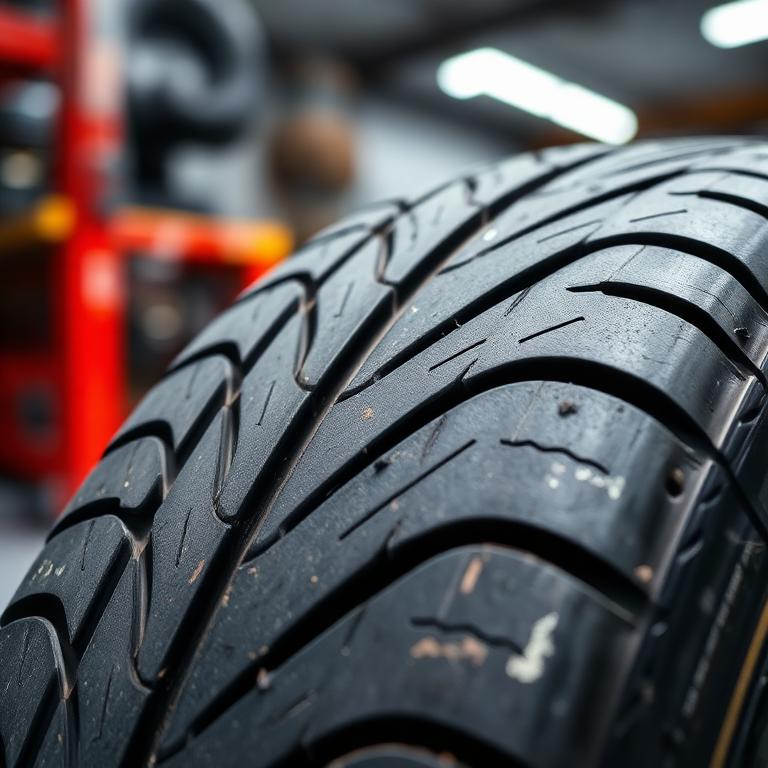
Every service lane sees a version of this moment: a customer comes in for an oil change, a recall, or a routine multi-point inspection, and somewhere in the pace of a busy day, the condition of their tires never makes it into the conversation. Tires weren't why they came in, so tires never come up. The customer drives off, and a few months later buys a full set from the big-box shop down the street.
That's not a missed ticket. That's a missed relationship.
The conversation is already happening, whether you're in it or not
Roughly 75% of customers return to service their vehicle wherever they bought their tires. That single fact reframes what a tire sale actually is: not a transaction, but the start of years of future ROs. The catch is that most of that opportunity shows up outside the tire bay entirely, on visits that have nothing to do with tires on paper.
What's already sitting in your lot right now
Here's a question worth sitting with: how many vehicles that pulled into your service drive this week were already sitting at 3/32" of tread or less, the zone most gauges flag red? Would anyone have known, if the visit was never about tires to begin with? The legal minimum in the U.S. is 2/32", and in LumaScanner scan data, we consistently see somewhere between 7% and 11% of vehicles roll in already in that red zone. That's not a rare edge case. That's roughly one in ten cars on your lot today, on a visit where nobody was looking for it.
Tread wear rarely tells the whole story
Uneven wear — especially cupping, feathering, or wear concentrated on one edge — is a textbook sign of an alignment issue. Sell a customer a new set of tires without addressing the alignment problem underneath, and you haven't fixed anything; you've just started the clock on the same complaint six months from now. Catching alignment at the same moment as tread wear is what turns a tire sale into a customer who trusts your shop caught something they didn't ask about.
Consistency, not skill, is the real gap
This isn't a story about service teams missing something they should have caught. It's a story about a check that depends on someone remembering to look, on a visit where looking wasn't the plan. Tread condition gets documented reliably when a customer is already there for tires, and inconsistently everywhere else — not because anyone dropped the ball, but because there's no consistent moment built into every visit where it happens automatically.
And it has to be fast
Even when tread condition is on someone's radar, a manual check takes time that a packed service drive doesn't have to spare. The upsell only works if surfacing the issue doesn't cost the advisor or the technician extra minutes they don't have on a day already running behind.
The time-and-money equation
This is where the math gets interesting. Dealers running structured, consistent processes for surfacing service opportunities see average repair order lifts of 12–32%, with roughly $6 in incremental service gross for every $1 invested in making the process consistent. But the bigger unlock is time, not just revenue: when tread depth, wear patterns, and alignment indicators are captured automatically as part of a vehicle scan already happening at check-in, nobody has to remember to look, and nobody has to spend extra minutes checking.
That's exactly the gap AI-powered vehicle scanning is built to close. A scan already run for damage or condition can just as easily flag tire wear and hand the advisor a data-backed reason to start the conversation, on any visit, without adding a single minute to it.
The takeaway
Ask yourself: on how many ROs this month did tread depth show up in the write-up, and how many of those visits weren't about tires at all? Tire upsells aren't a hard sell, and they're not a skill problem. They're a consistency and speed problem — one that shows up on the visits nobody expects, on cars that were never in for tires in the first place.
Tire condition is one of six inspection categories LumaScanner captures in a single drive-through — alongside body damage, hail, cosmetic defects, underbody, and wheels.
Related: Beyond Damage Detection: Building a Data Infrastructure for Fixed Ops Revenue Growth
See tire upsells surface automatically
See how a scan already happening at check-in can flag tread wear and alignment indicators in seconds, on every visit.